

How to choose a kitchen knife
It’s difficult to know where to start when buying your first kitchen knife. Here’s our guide.
- What type of kitchen knife should I buy first?
- How do I choose between knife brands?
- I want to buy a knife set. What do you recommend?
- German or Japanese knives?
- Damascus knives or plain blade knives?
- Carbon or stainless steel knives?
What type of kitchen knife should I buy first?
Gyuto or Santoku
First off the block should be a gyuto / chefs knife between 18cm to 21cm OR a santoku knife. Both will do a variety of tasks very well but each has its strengths and weaknesses. If the budget allows buy both!
The santoku knife will be better for straight chopping. In comparison the blade shape of the gyuto has a stronger curve and will be better for those who cut with more of a rocking action.
Utility / Petty Knife
Secondly a small utility knife is great for those little things such as cutting an apple or segmenting an orange. Don't fall into the trap of buying an inferior quality utility knife. A utility knife should be just as sharp and hold an excellent edge the same as your chefs knife.
Chopper
Thirdly look for a heavy duty chopper. This will save your Japanese kitchen knives from serious damage from cutting bones and coconuts.
Bread Knife
If you like crusty bread, a sharp serrated bread knife to cut bread loaves will make your life a whole lot easier in the morning.
After these kitchen cutlery basics the sky is the limit.
There are many task specific knives that perform their duty far superior manner to the standard knives above. If you are keen on sashimi - buy a yanagiba.
If would like to learn a new way to fillet fish - try a deba.
How to choose between different knife brands
Knife brands will differ in their design, aesthetics, weight, steel, sharpness and edge retention. It is important to note that different knifemakers can produce vastly different quality knives using the same ingredient steel. The virtuosity of the blade is truly up to the knifemaker. Chef's Armoury have carefully selected the best knifemakers and series to suit different budgets.
If you would like advice on which kitchen knives to choose please feel free to contact us or drop into the Sydney or Melbourne stores.
I want to buy a set. What do you recommend?
There are many cheap knife sets that you can buy for less than $300, but what you will receive is a bunch of knives of poor fit and finish, poor balance, durability and undoubtedly made of cheap steel that will never be very sharp and become blunt very quickly. If you buy the cheap sets you can buy and throw them out every couple of years or you can invest in a few good quality blades that will last over 10 years.
Most chefs only use 3 knives to do 90% of cutting tasks, so investing in a few good quality kitchen knives is our recommendation.
Even if you spend your whole budget on one or two good knives you will have far more satisfaction than having a whole set of disappointing knives.
Mix and match, different knifemakers make some styles of knives better than others. Just like your shoes are rarely the same brand as your trousers, it's not so important that your Yanagiba is the same brand as your Gyuto.
German or Japanese Knives - Which is the best?
As you may have guessed Chef's Armoury is quite dedicated to Japanese knives. There is still definately a place in the knife drawer for a high quality German knife. Read more about Japanese knives V European knives.
Damascus or Plain Blades?
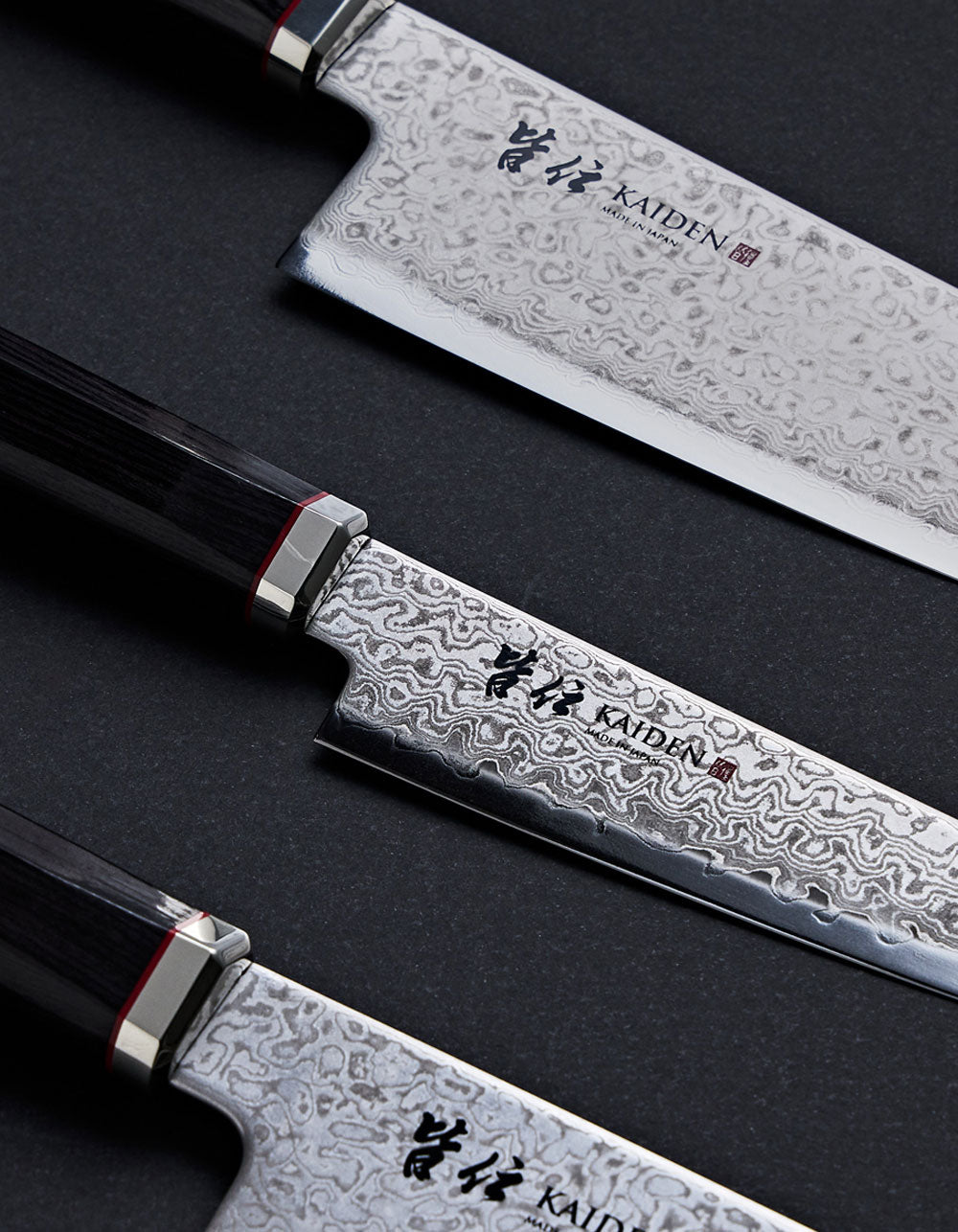
The main attraction of damascus knives is their appearance. Damascus knives are truly beautiful, a fusion of many layers of steel clad around a hard steel core for the cutting edge. With hammer forged knives you can see the blacksmith's art in the individual patterns he creates by manipulating billets of damascus steel.
In many cases the core of the damascus blade is made from either VG10 or powdered steel.
In terms of performance, damascus steel does not offer an advantage of sharpness or edge retention compared to plain blade knives.
Carbon or Stainless Steel Knives
Carbon steel is prone to rust and tarnish so if you are not willing to look after your knives perhaps stainless steel knives are better for you.
However high quality carbon steel by a talented knifemaker will reward enthusiasts with a great edge that will last the distance if sharpened properly.
Luckily there have been many advances in stainless steels in the last couple of decades so the performance gap between carbon and stain resistant steel is no longer an argument. There are good and bad knives of all steel types. How good a knife is will depend largely on the skill of the knifemaker.
There is also a new breed of carbon steel knives which are clad in stainless steel for easier maintenance if you're thinking of trying a carbon steel knife. In our collection pages these are noted as "stainless clad carbon" below the product name.
...
Explore Kitchen Knives by Type