

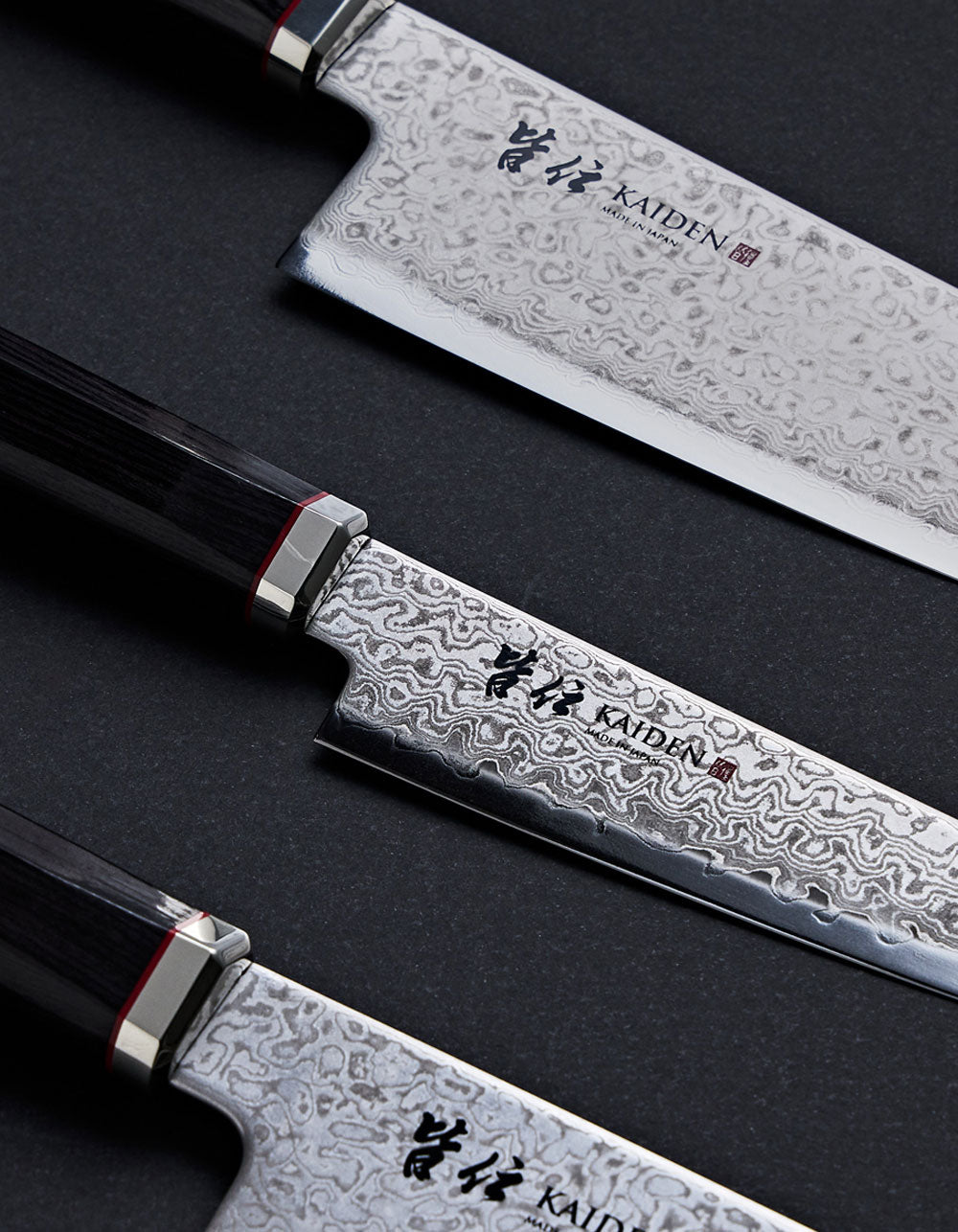
About Japanese Knives
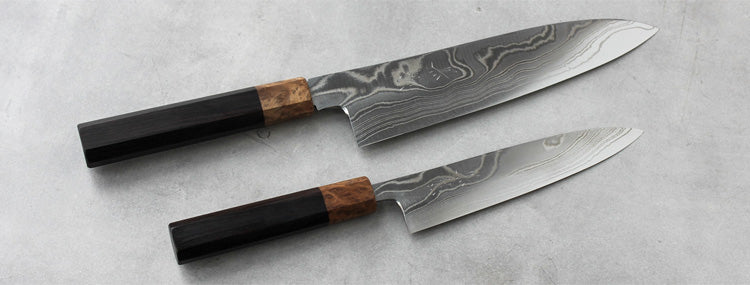
Why Japanese Knives
Knowhow
For centuries Japanese craftsmen have been tinkering with steel. The Japanese are famous for making the very best chisels, wood planes, saws, swords and knives throughout the ages.
Today technology is combined with generations of knowledge to create mechanical wonders like high-speed bullet trains, airframes for fighter jets and earthquake proof buildings all made from steel.
Japanese knives draw from tradition, technology and an intergenerational knowhow of how to manipulate steel.
Thinner, harder, sharper
Thinner, harder, sharper are the important trio of attributes for an excellent kitchen knife. A Japanese knife has thinner, sharper bevels made of harder steel that keep their edge for longer.
Pursuit of Excellence
To constantly strive towards excellence is an age old Japanese philosophy that is so prevalent in Japanese culture. An individual knifemaker will always be thinking how to improve their products and the processes involved in their workshop.
Exotic Steels
Knifemakers in Japan are spoilt for choice when it comes to steel. Companies like the juggernaut Hitachi have long supported traditional knife industries with carbon steels rated "best in class". At the other end of the scale TSS are masters of making modern steel such as VG10, R2 and cladding with nickel Damascus.
Japanese knifemakers have superior ingredients, generations of expertise in knifemaking, swordmaking and metallurgy and a life long dedication to the pursuit of excellence that have put them streets ahead of the pack.
Japanese V European Knives
All good chefs have a few Japanese knives in their collection and use them in preference to European knives for a number of reasons:
1) Hardness
Your typical German knife has a hardness rating of HRC 52 – HRC 56 whereas your typical Japanese knife has a hardness ranging from HRC 58 – 65. The harder the steel and the better quality steel, the longer the edge stays sharp.
You many notice in some kitchens chefs using a steel to hone their knives often before they cut as their knives get blunt so quickly. Japanese knives require far less sharpening and maintenance than European knives.
2) Type of steel
Most German steels used in knifemaking are fairly similar. However the modern Japanese knifemaker uses a variety of alloys and steels depending on the desired finish and use of the knife.
Traditional Japanese knives are made from hard steel with a backbone of soft iron while modern blades may employ a three layered sandwich of steel or multi layer "Damascus". Like the Japanese philosophy on food, a knife should be harmonious to all five senses.
3) Thickness and weight
A German knife is generally heavier. It has a thicker and more robust blade with a more obtuse/larger angle at the cutting edge. This makes it useful for cutting through tough foods like chicken bones or pumpkin but doesn’t offer the amazing sharpness of a thinner blade.
A Japanese knife is generally lighter and has a thinner blade, so it should not be used for heavy cutting tasks like chopping through bones as this will most likely chip the blade. Most Japanese knives are best used for slicing and dicing.
4) Angle of blade
Most quality Japanese knives can be sharpened to a much finer angle at the cutting edge because of the harder steel. This contributes to a sharper knife that slices and cuts through food with ease and with the additional benefit of less pressure on the muscles and joints in the hand. Once you start using a good Japanese knife you will immediately notice the difference.
5) Thick Extending Bolster
European knives often have a bolster extending all the way from the top of the handle to the bottom heel of the knife. This makes sharpening quite difficult as the thick bolster needs to be ground down in order for the blade to be sharpened properly. Japanese knives are not designed this way to make the sharpening process quick and easy.
...
Read more about How to choose a kitchen knife