
Bread has a structural problem that a straight-edged blade can’t solve cleanly - the hard exterior and soft interior need a cutting action that a straight edge simply isn't designed for. A serrated bread knife is the only tool that handles both in a single stroke. A chef's knife will crush bread.
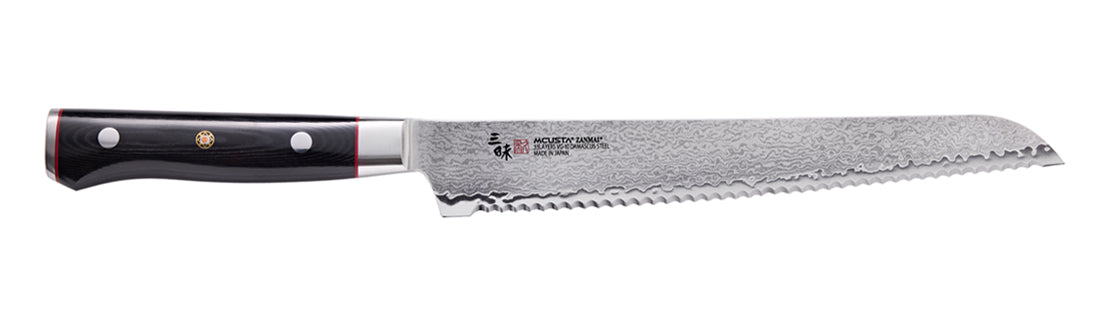
The bread knife is a long serrated blade, typically 220mm to 300mm, designed to cut through bread without compressing or tearing. The serrated edge grips the crust on the draw stroke and saws through cleanly, leaving the interior structure intact. On a good loaf - sourdough, baguette, crusty batard - the difference between a proper bread knife and improvising with another blade is immediately obvious in the quality of the slice.
The use case extends well beyond bread. A serrated blade handles anything with a firm exterior and soft interior - tomatoes, citrus, pineapple, soft cakes, Japanese milk loaf, and some delicate pastries where a straight edge would crush rather than cut. For home bakers in particular, a good bread knife is one of the most often used knives in the kitchen.
The Japanese approach to bread knives brings the same attention to blade geometry and handle quality found across the rest of the range. Finer, more closely spaced serrations produce cleaner cuts with less tearing and crumbing than coarser Western-style serrations. The Hachido bread knife in this collection is a notable example - a Japanese-handled serrated blade with a tapered design suited to everything from crusty loaves to teacake.
When choosing a bread knife, blade length matters more than it might seem. A longer blade - 270mm to 300mm - lets you cut through a wide loaf in a single stroke without the heel catching. Shorter blades are more suited to smaller loaves and delicate pastries.
A good bread knife is a great gift idea and one of the most underrated upgrades you can make.