

Most home cooks buy protein pre-portioned and never need to think about this knife. But if you buy whole chickens, bone-in legs, rack of lamb, or larger primal cuts, you'll know the frustration of trying to work around bones with a knife that wasn't designed for it. The boning knife exists precisely for this task - and a Japanese version does it with considerably more precision than most Western equivalents.
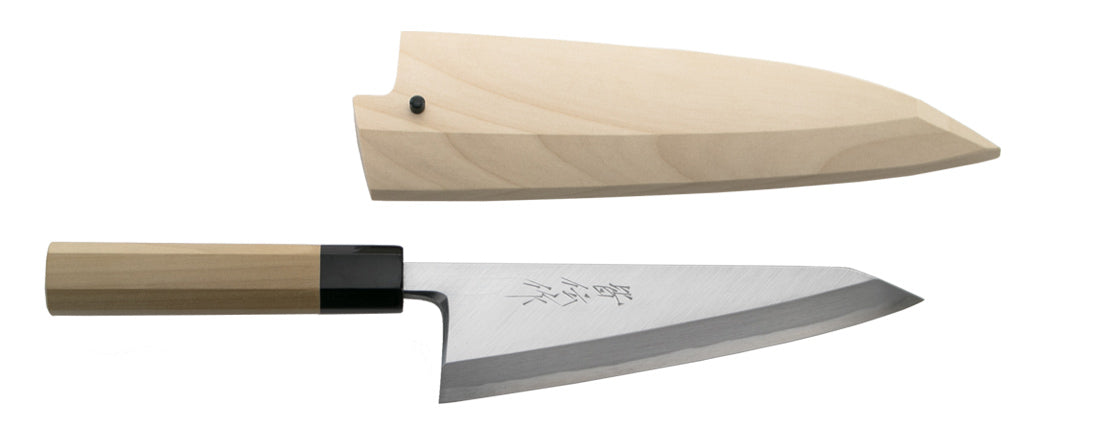
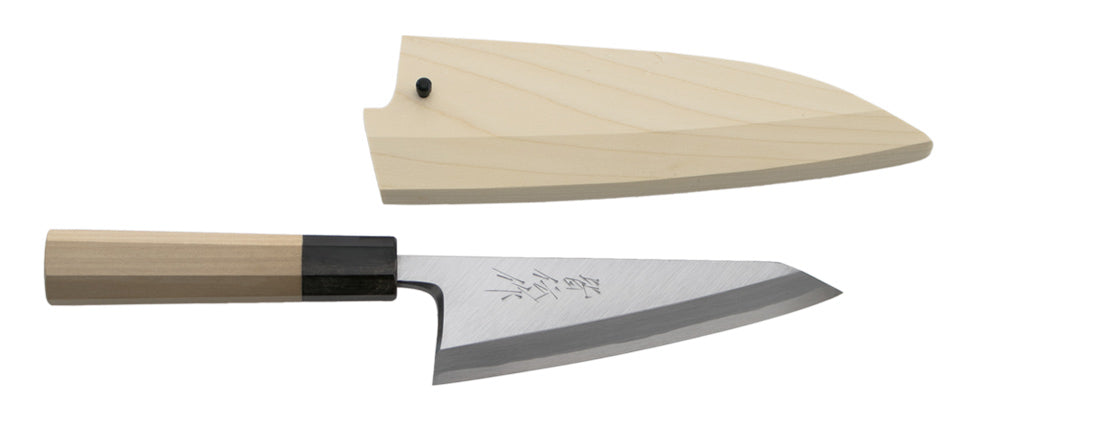
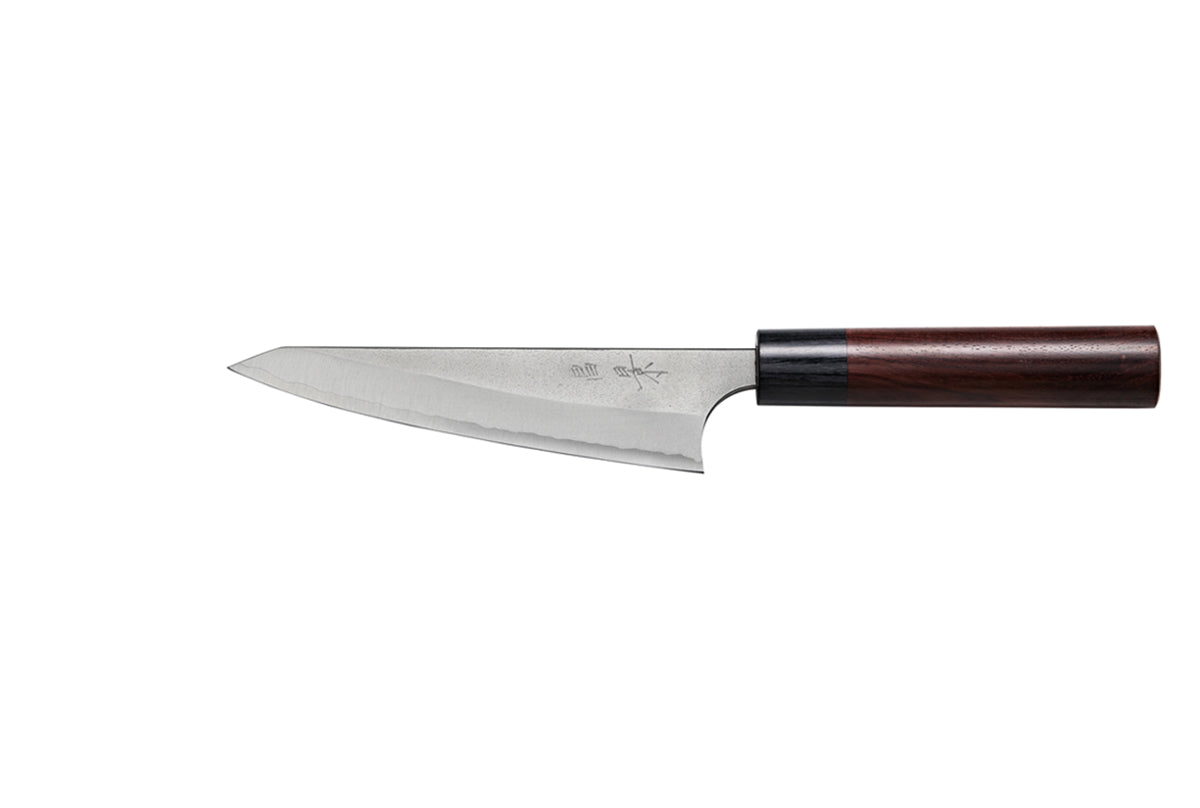
Japanese boning knives are short, stiff, narrow blades, typically 140mm to 165mm, with a pointed tip designed to navigate tightly around joints, between bones, and through connective tissue. The narrow profile reduces resistance as the blade moves along the bone, giving you better control and less wasted meat. The rigidity is deliberate - unlike a flexible Western boning knife, a stiff blade gives you more accuracy when following the exact line of a bone.
Within this category, the Honesuki deserves specific mention. It is a Japanese boning knife designed specifically for poultry, with a triangular blade profile and a thick spine that can slice through the tissue in smaller joints cleanly. If you break down whole chickens regularly, the Honesuki is the more purpose-built tool. If you want to cut through thick or hard bones use a western cleaver.
Compared to a Petty knife, which can handle light boning work in a pinch, a dedicated boning knife has the geometry and rigidity to do the job properly at scale. Compared to a Western boning knife, Japanese versions tend to be stiffer, sharper out of the box, and more precise at the tip at the cost of less flexibility for curved cuts around larger bones.
When choosing, blade length is largely determined by the proteins you work with. A 150mm suits poultry and smaller cuts well. Stainless steel is the practical choice for a knife that will regularly contact raw meat and bone. Or opt for carbon steel if that is your preference. If you work with whole proteins rather than pre-cut portions, this knife pays for itself in yield alone.