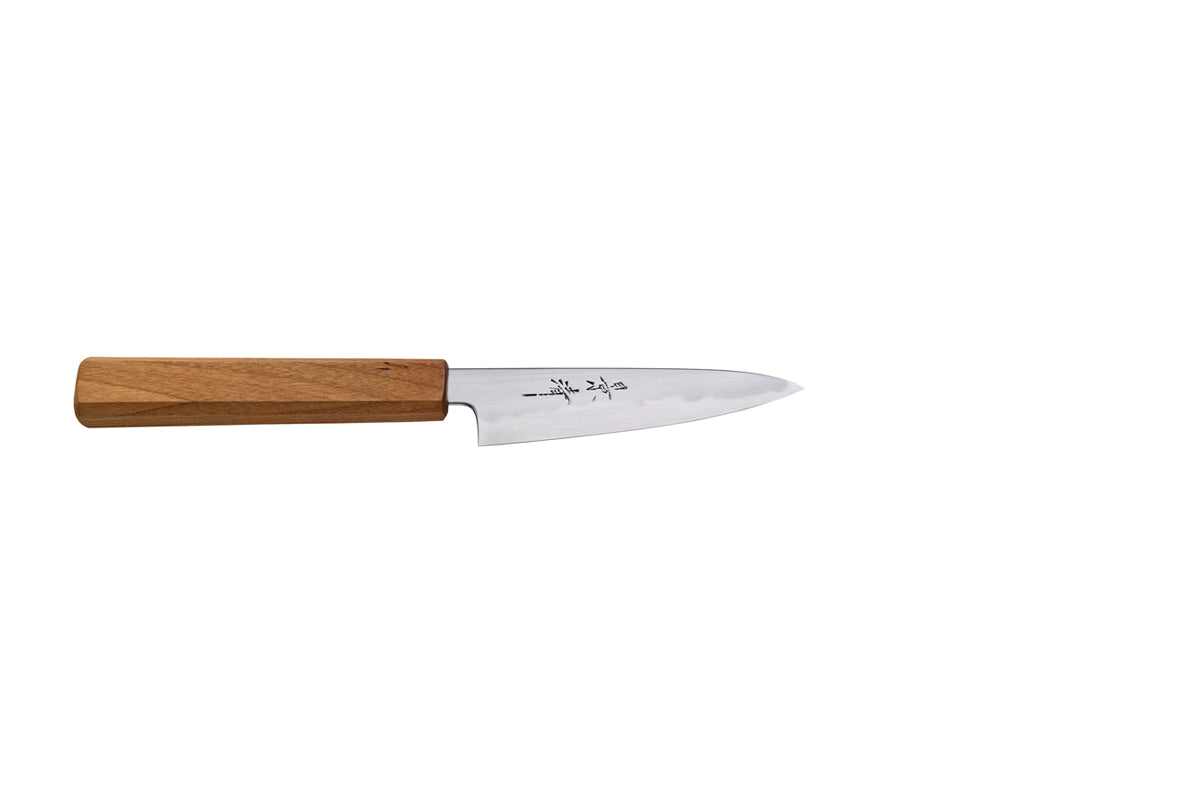

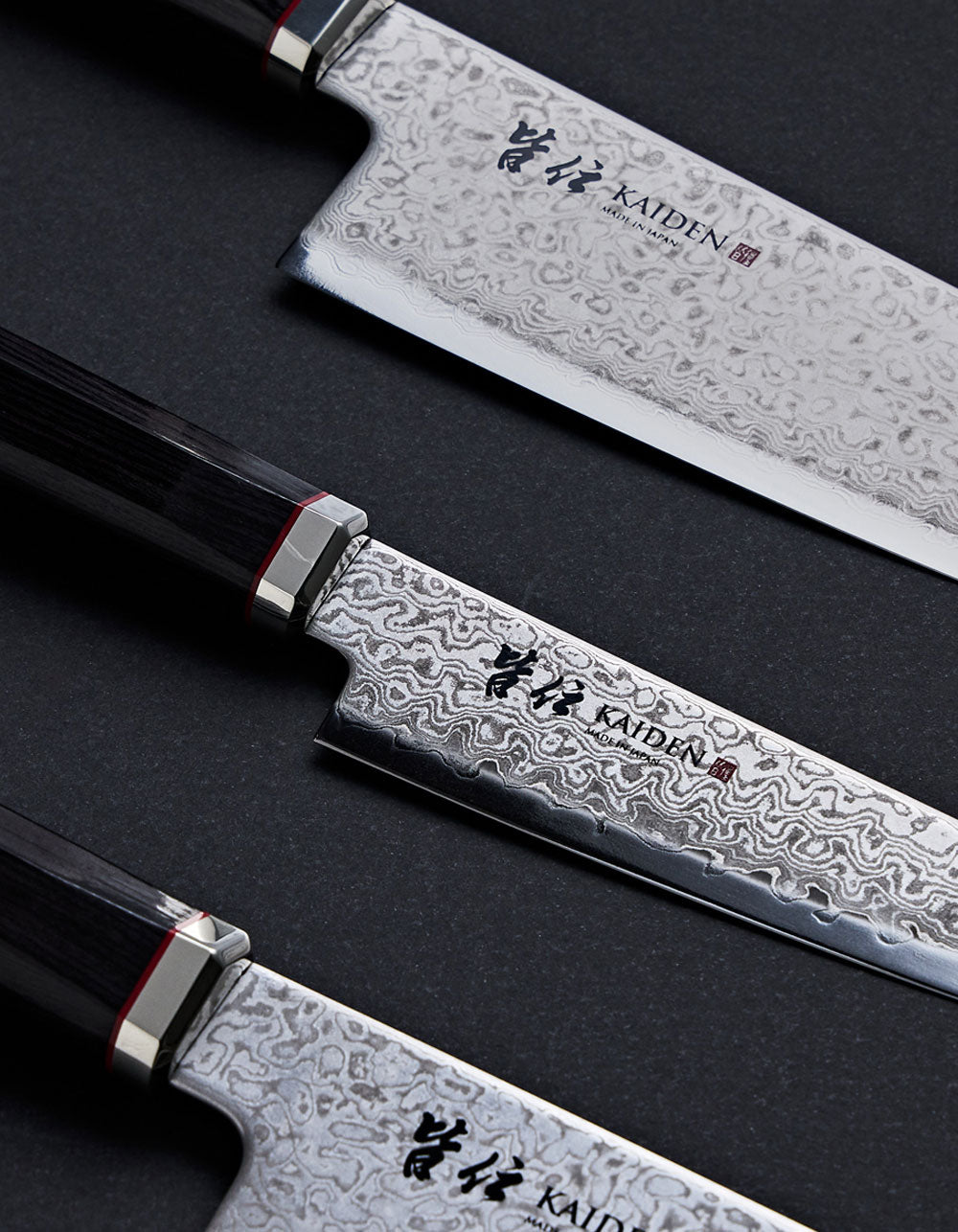

Most kitchens have a paring knife. But sadly many of those paring knives aren’t nearly adequate - thin blades that flex, edges that dull quickly, handles that give you no real control. A Japanese paring knife is a different tool entirely.
The paring knife is the shortest blade in the kitchen, typically 70mm to 110mm. It's designed almost exclusively for in-hand work - peeling, trimming, coring, and detailed cutting where the food is held rather than placed on a board. The blade is short, rigid, and ground to a fine point, which gives you precise control over small, intricate cuts that a longer knife simply can't manage safely.
It suits any cook who works regularly with fruit, root vegetables, or anything requiring detailed hand work. Peeling an apple, trimming artichoke leaves, removing citrus pith, hulling strawberries, deveining prawns - these are all tasks where the paring knife is the right tool and everything else is a compromise. In a professional kitchen it's an essential secondary blade, used constantly for prep and plating detailed work.
Compared to a Petty knife, the paring knife is shorter and intended almost entirely for in-hand use rather than board work. The Petty is more versatile across a wider range of tasks. The paring knife is more precise on the smallest jobs. Many cooks own both and reach for each instinctively depending on the task.
When choosing, blade length is straightforward - most cooks do well with an 90mm+ blade. The more important consideration is rigidity and point geometry. A Japanese paring knife holds a finer edge and has a more acute tip than most Western equivalents, which is where the real difference in performance shows up.
A good paring knife is one of those tools you don't think about until you use a great one - then you can't imagine cooking without it.