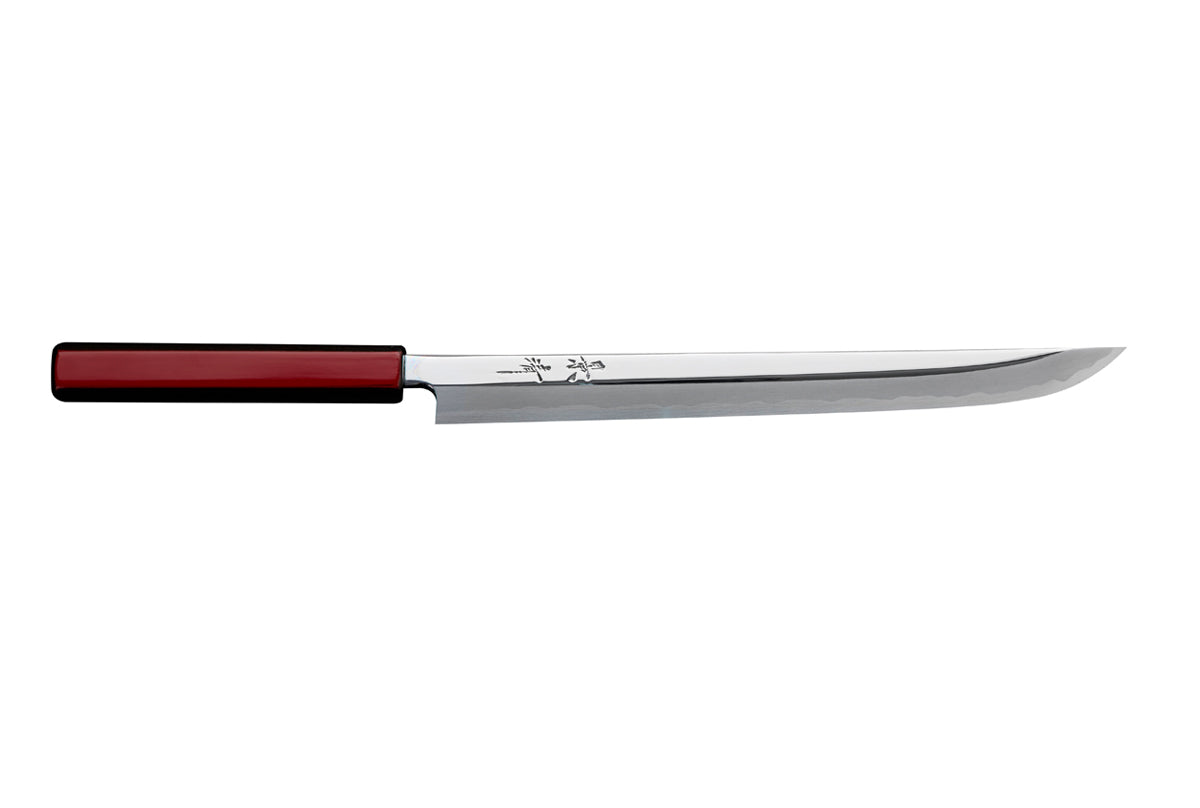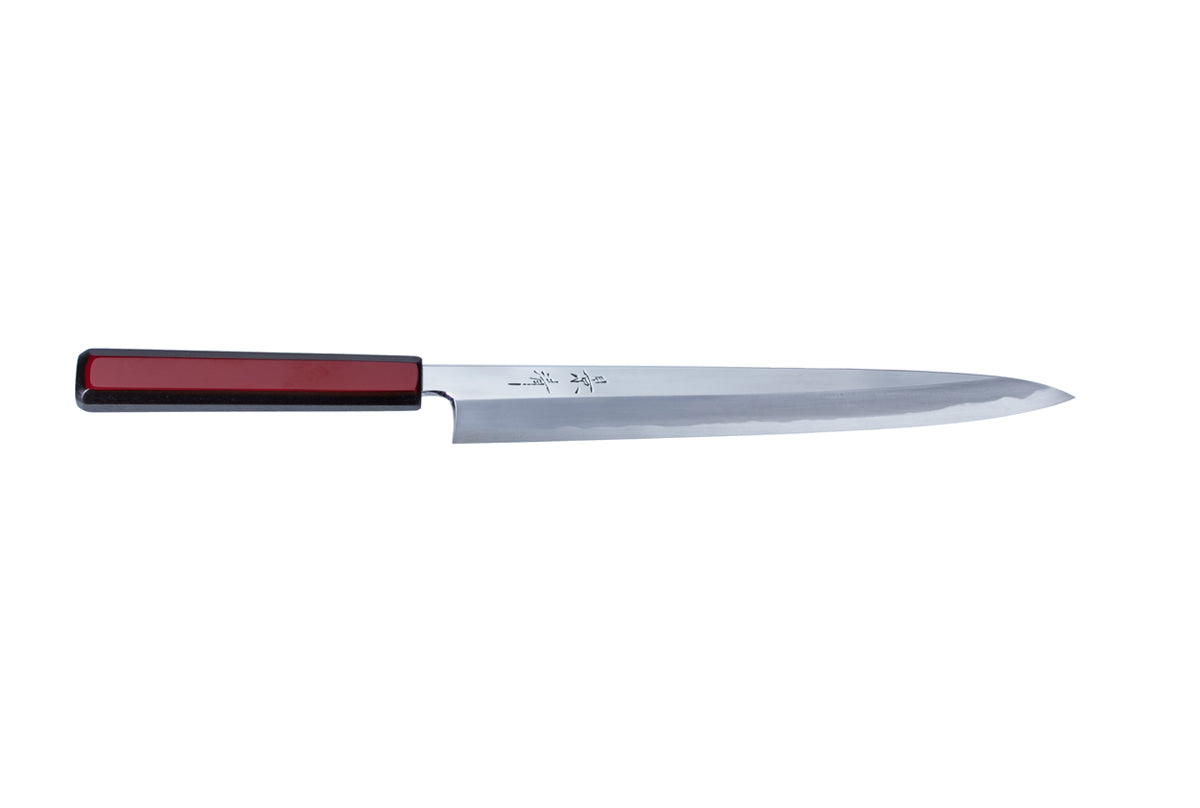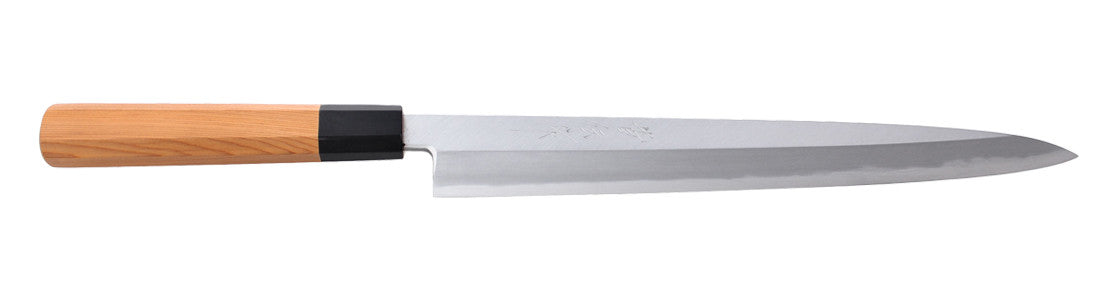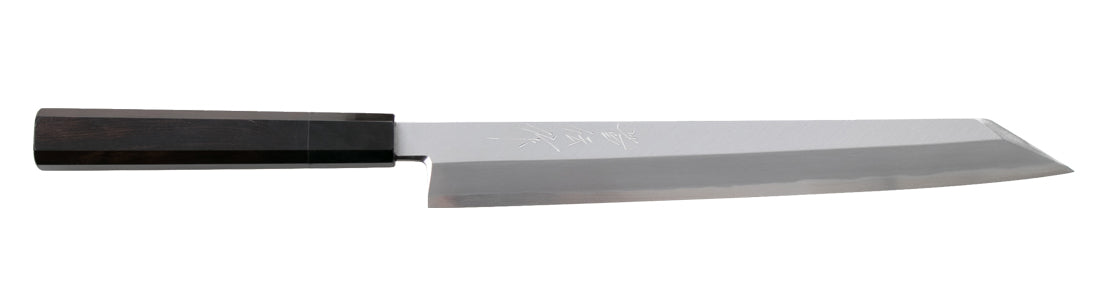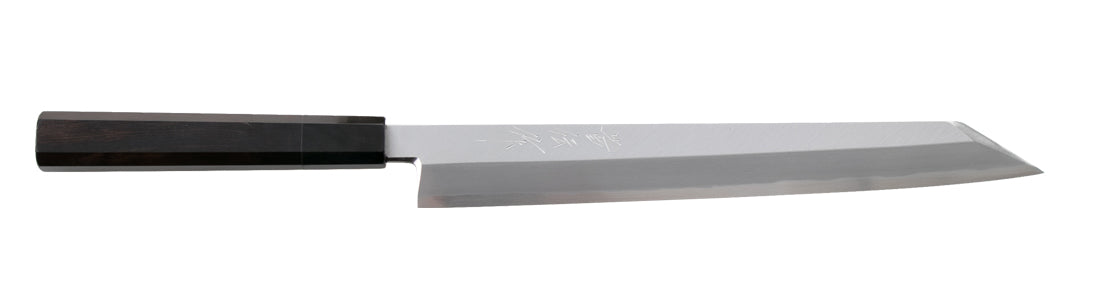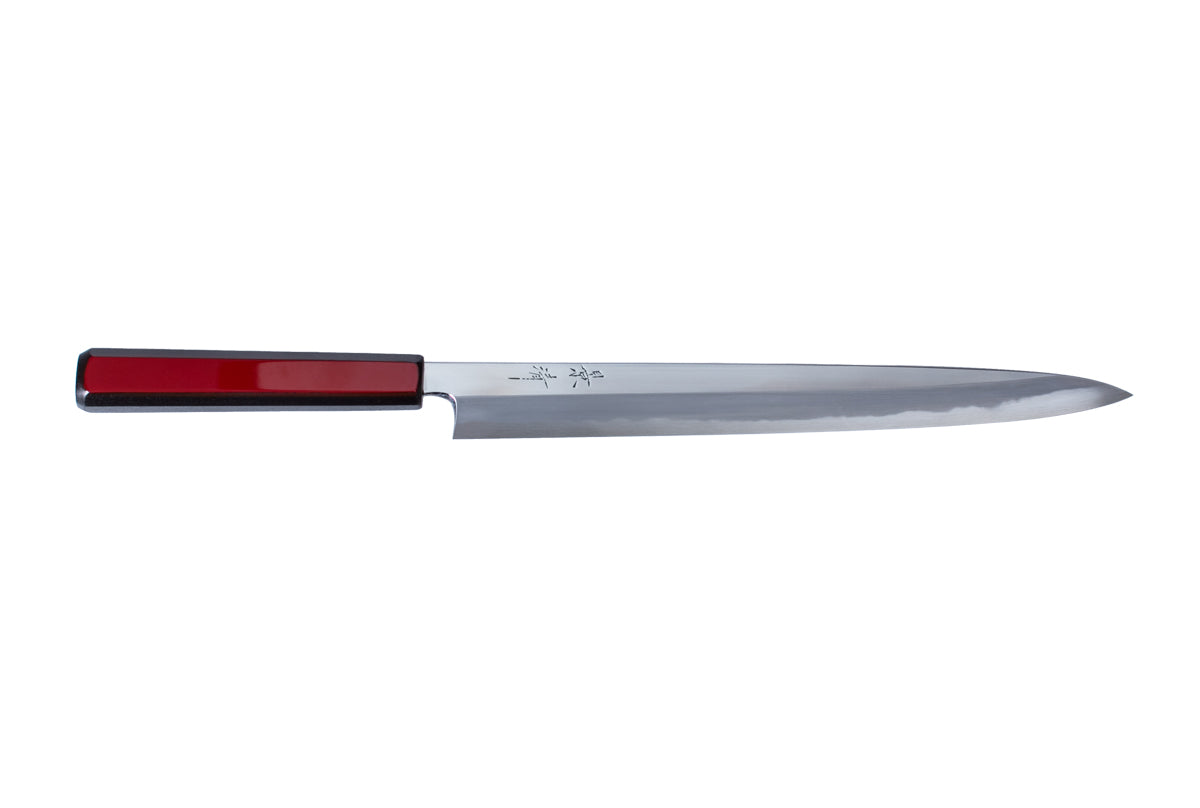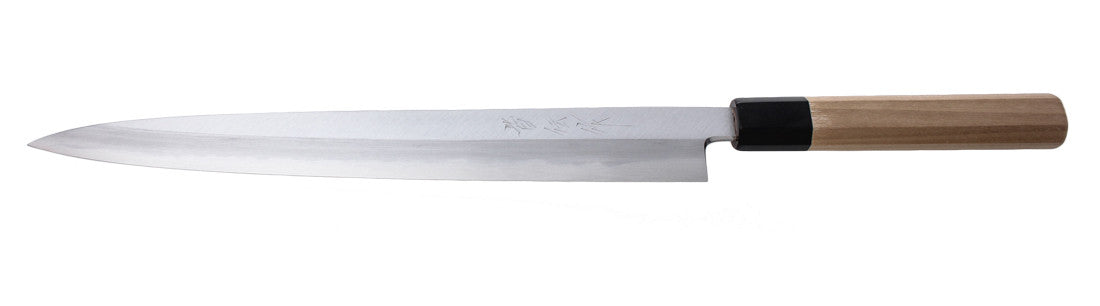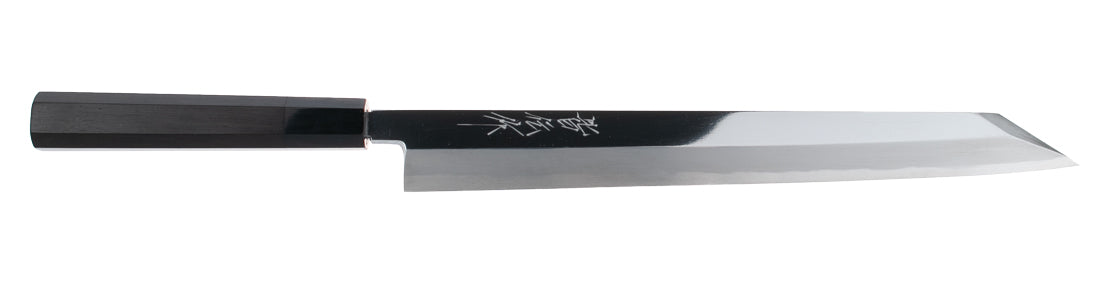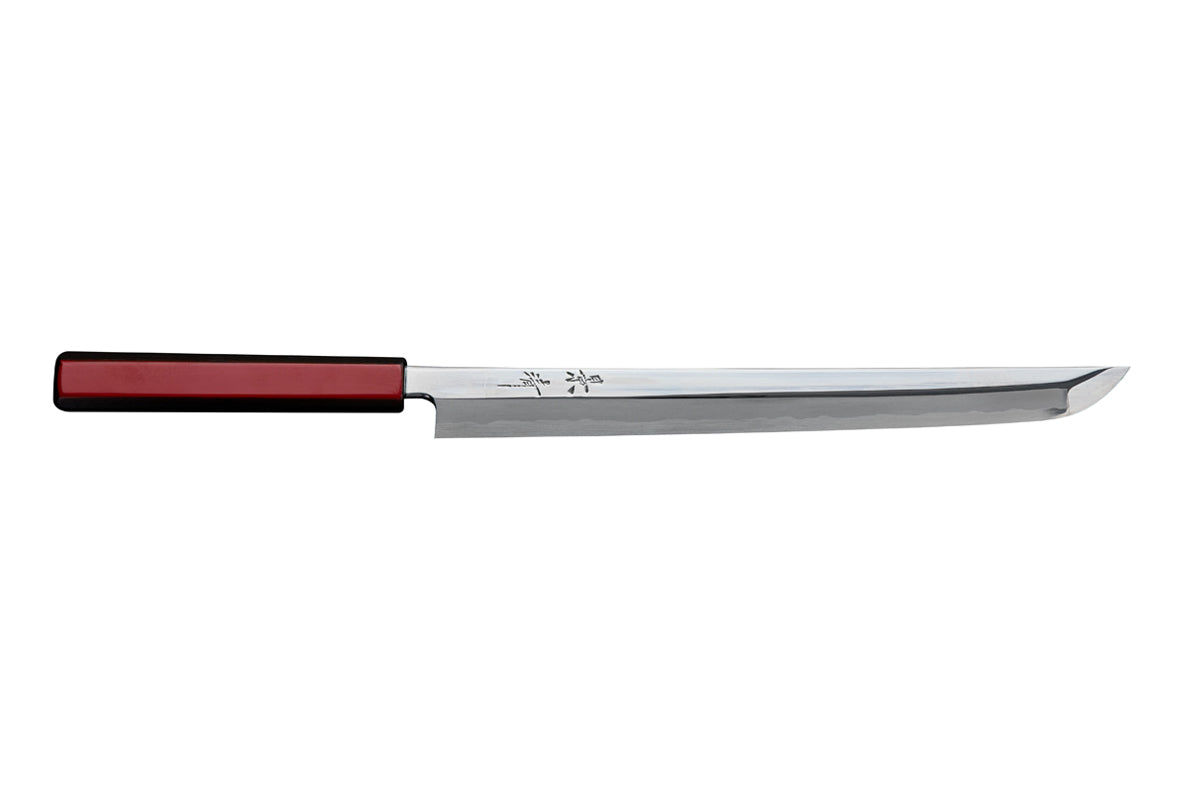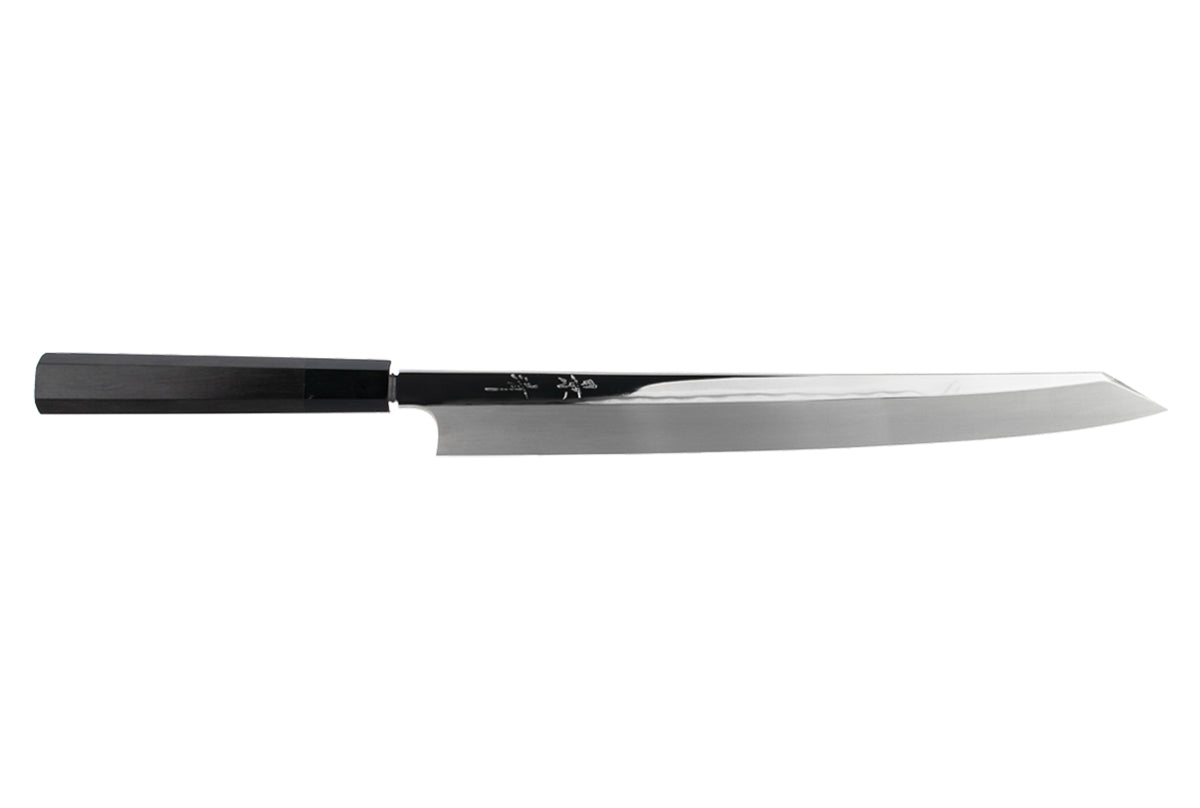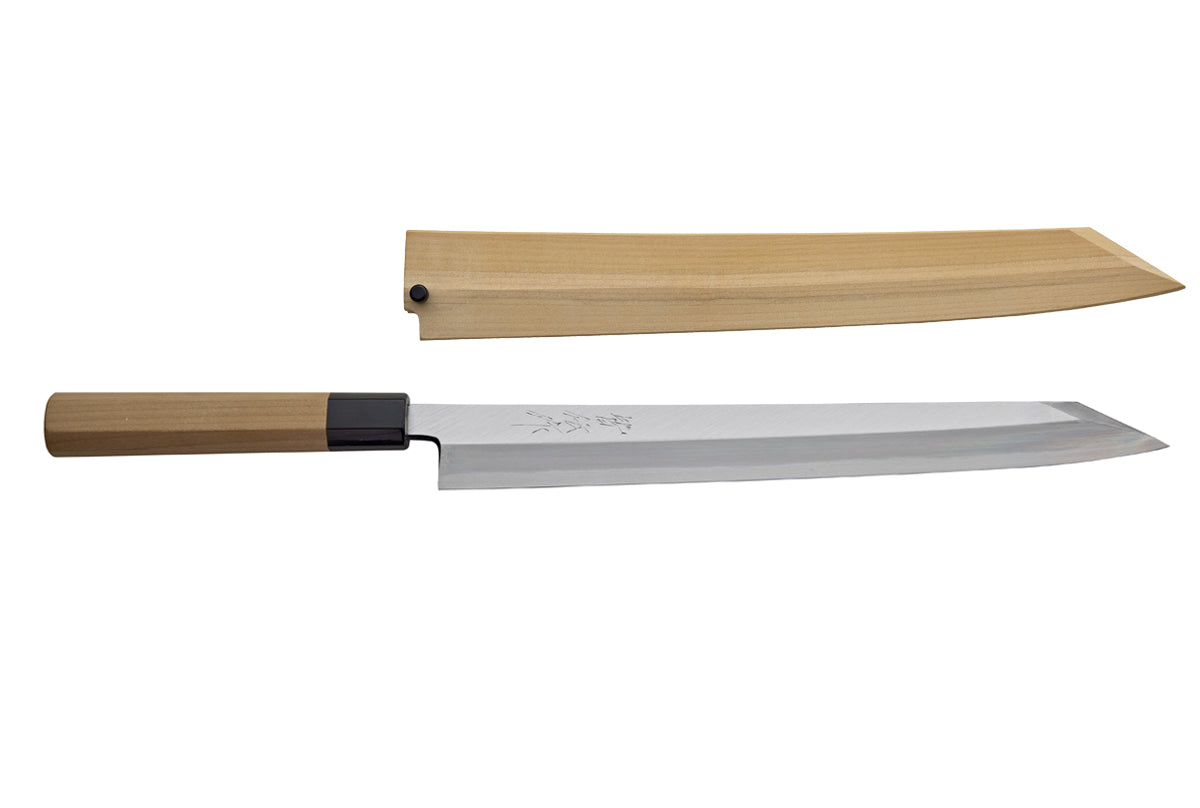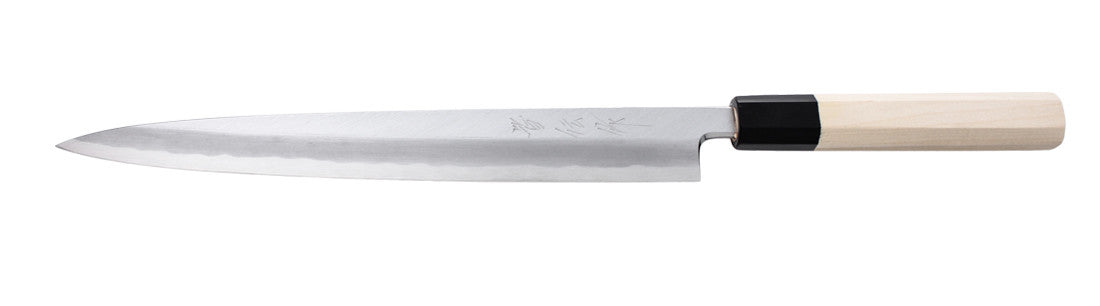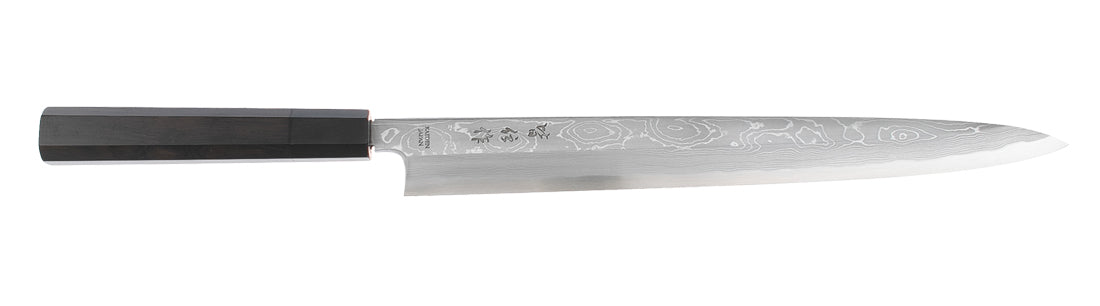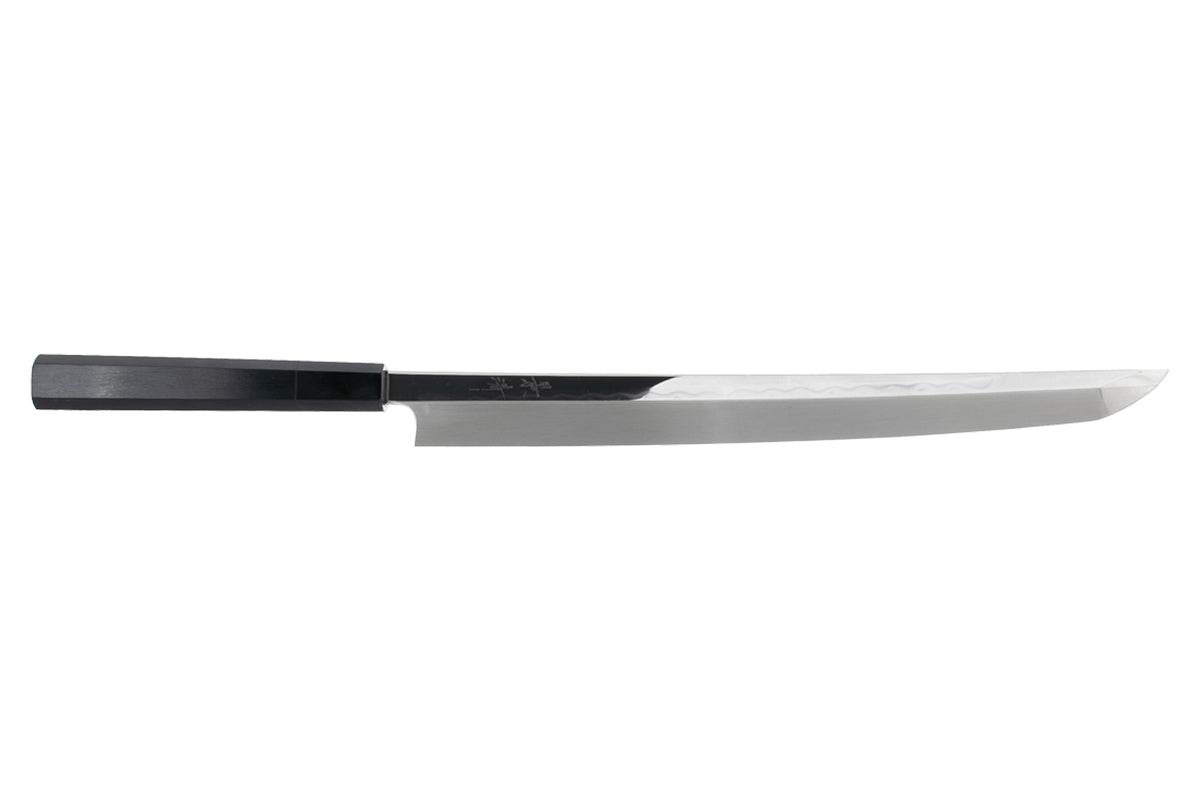

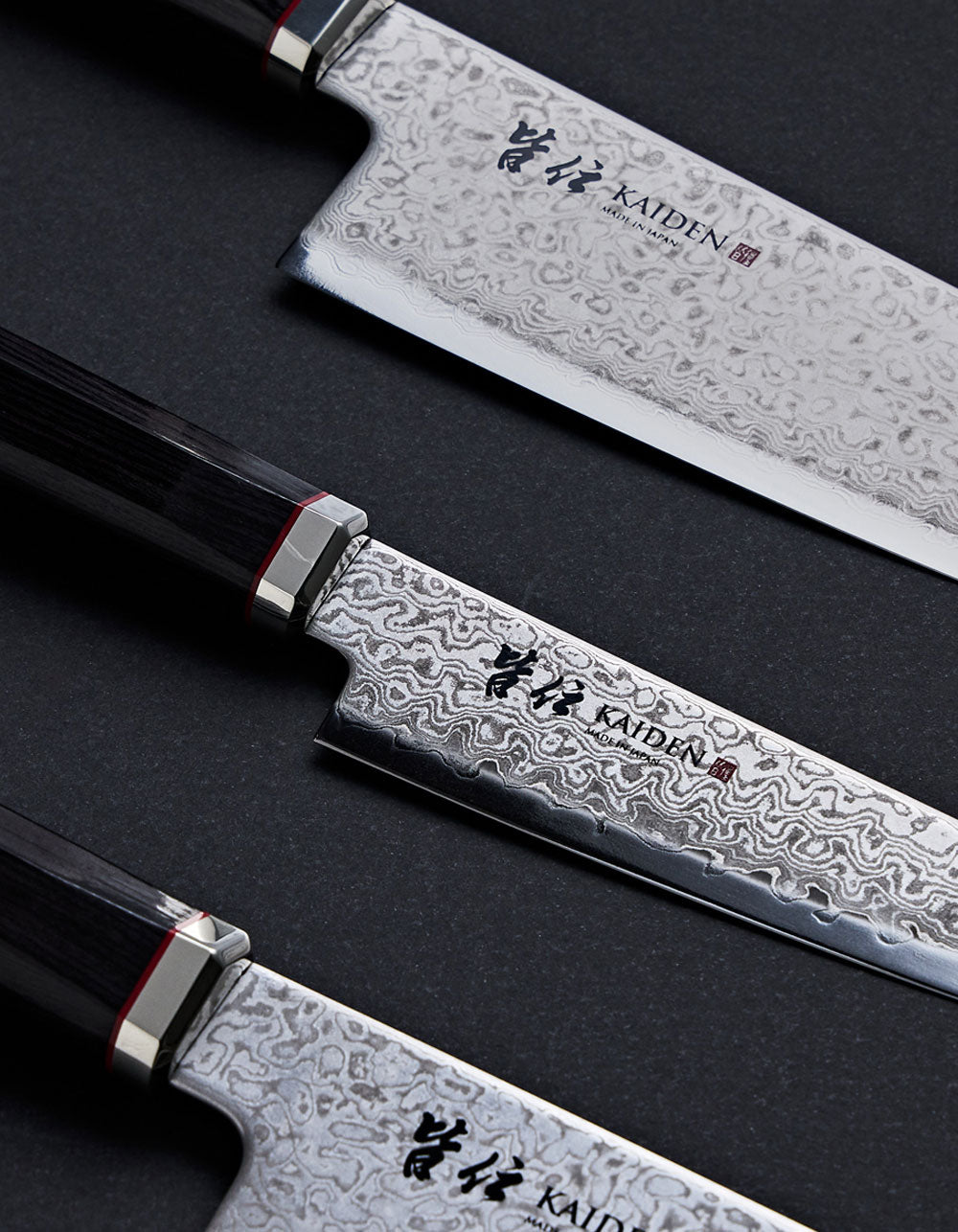

The quality of sashimi is determined almost entirely by the cut. A blade that drags, tears, or requires multiple strokes damages the cell structure of the flesh, affecting both texture and flavour. The Yanagiba was designed with a single purpose: to eliminate that problem.
The Yanagiba is a long, slender single-bevel blade, typically 240mm to 330mm. It’s a single bevel - that is sharpened on one side only. It allows the knife to glide through fish in a single drawing stroke, severing fibres cleanly rather than compressing them. The concave back face (urasuki) reduces surface contact during the cut, which means the slice releases from the blade cleanly with less sticking. The result is sashimi with a smooth, shiny surface that holds its structure on the plate.
It is primarily a professional tool, built for chefs who prepare sashimi and nigiri regularly.
Serious home cooks who prepare Japanese food frequently will also get real value from it - but this is not a beginner's knife. The single-bevel grind requires specific sharpening technique, and the long blade demands a pulling cut rather than the push-cut motion most Western cooks default to. There is a learning curve.
Compared to a Sujihiki, the Yanagiba is single-bevel and purpose-built for raw fish. The Sujihiki is double-bevel, more forgiving to use, and better suited to cooked proteins and general slicing tasks. If you're preparing sashimi specifically, the Yanagiba produces a superior result. If you want a slicer that covers more ground, the Sujihiki is the more practical choice.
When choosing, blade length matters. A 270mm suits most home and restaurant use. A 300mm or longer is the professional standard for larger fish. Use a 240mm if you’re short on bench space or don’t like using longer knives. Carbon steel - white or blue - is the traditional and preferred choice for performance, but requires careful drying and maintenance to prevent rust.
If you want to prepare sashimi seriously, there is no substitute for the right tool.